CHEM 2211 - Midterm #1

Sample Questions (from fall 2002 midterm)

Part A: Multiple Choice (15 questions, worth 1 each)

 
2.
What is the IUPAC name for this compound?
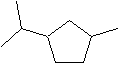
(a) 1-methyl-4-isopropylcyclopentane
(b) 1-isopropyl-3-methylcyclopentane
(c) 3-methyl-1-isopropylcyclopentane
(d) 4-isopropyl-1-methylcyclopentane
(e) 1-isopropyl-4-methylcyclopentane
 
4.
What is the IUPAC name for this compound?
(a) 3-methyl-4-hexen-1-yne
(b) 4-propargyl-2-pentene
(c) 4-methyl-2-hexen-5-yne
(d) 2-propargyl-4-pentene
(e) none of the above
 
5. Which of the following describes the most stable form of cis-4-tert-butyl-1-methylcyclohexane?
(a)  both groups are axial
(b)  both groups are equatorial
(c)  the tert-butyl group is axial and the methyl is equatorial
(d)  the tert-butyl group is equatorial and the methyl is axial
(e)  none of the above
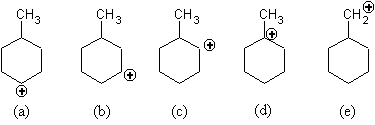
 
8. Which of the following is the most stable carbocation?
 
9. Which of the following is not a nucleophile?
(a)  OH-
(b)  NH3
(c)  Br-
(d)  BF3
(e)  H2O
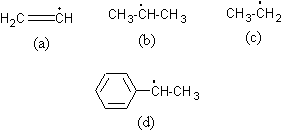
 
15. Which of the following is the least stable radical?

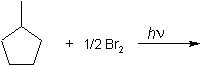
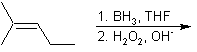
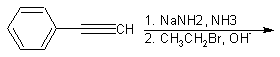
Part B: Supply product(s) for the following reactions (5 questions, 1 point each)

 
16.
 
18.
 
19.

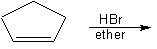
Part C: Provide product(s) and show a detailed, step-by-step mechanism for the process (5 points)

 
21. Note: last year's mechanism was on a topic not covered this year.  An equivalent question would be along the lines of:

Be sure to show what stereochemistry, if any, the product(s) will contain.


Last updated, September 29, 2003
Page maintained by Craig MacKinnon